Out and About in Coventry: Community Voices
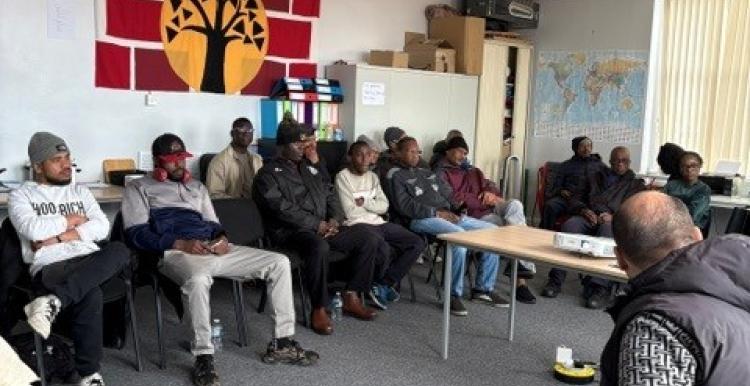
Hearing those with less voice in society, is one of Healthwatch Coventry’s aims: - to ensure that everyone’s experiences are heard. Migrants, asylum seekers, and refugees are among those whose voices are least heard in society.
Who are Inini
Inini is a charity set up to provide “Safe, facilitated peer support groups delivered in community venues across Coventry and Warwickshire. These groups provide supportive spaces where individuals can share experiences, build connections and access encouragement within their local communities” for migrants who need support, including refugees and asylum seekers, based on their Chief Executive Officer’s experiences of their journey after arriving in the UK.
According to government information, asylum seeking migrants are a vulnerable group who need additional consideration when meeting their health and care needs. Through the trauma they have escaped from and the trauma of the processes they have to go through to gain status in the UK. These add to their need for care and support – both physical and mental.
Useful links for information
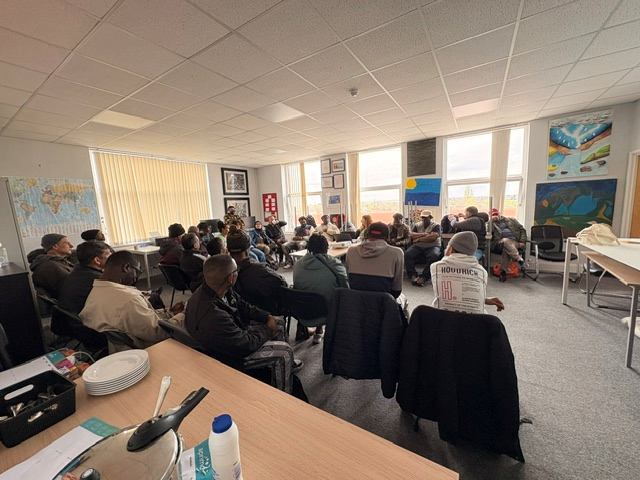
We met with one of Inini’s support groups to hear their experiences of health and social care services. This is what they told us:
Quality of care
- “Feeling that the NHS send students to the hotels to do checks on the residents (asylum Seekers)
- “I was not asked to give consent before I am treated.”
- “Why should we have trainee doctors – we need trained doctors.”
- One person said, “they experiment on us.”
- “We are not given the care and support we need.”
Communication
- “If you don’t have the confidence, it is not easy to speak out if you speak to a GP.”
- “Doctors should know that people who have been traumatised are afraid and should know better than to do things to people, for example giving people drugs without explanation. Consultants should tell people what they are putting in. (their body”)
- “There is a language barrier, my wife had surgery, but we were not informed before about the procedure, what would happen and what it meant. My wife had no English.”
- “NHS should explain the difference between the primary and secondary health services to migrants.”
- “I received cancer screening letters; English is not my first language then how can I read and understand the letters.”
- “Adult Social Care should ask us- how would you like to be informed/ notified about treatment, letters and so on.”
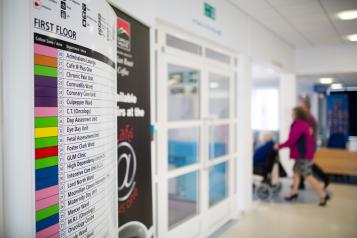
- “When I go to the hospital and ask where I want to go, they say “ go and read the signs” very rude but I can’t read English, it is not my first language.”
University Hospital Coventry and Warwickshire
- “I was in UHCW on the ward at night, they say ring buzzers, but when I rang the buzzer, they did not come. They were in the reception area talking about things but did not come.”
Accident and Emergency
- “I took my daughter to emergency waited 12 hours. Until the following morning – did obs (observations), people were sitting, and people just walked off.”
- “Triage said give paracetamol, then have to wait still in pain in A&E.
- “We have a problem they offer to call you a taxi to get to A&E– how are you going to pay? Get an ambulance – takes a long time, people are suffering and losing their lives because of wait for ambulances.”
Cost and payment
There was a discussion on rules for payment for NHS services.
- “Issue NHS and home office not speaking together – send bills for payment for care when we are not allowed to work/ don’t have any money.”
- “I had an Ear Nose and Throat appointment, started to panic, so cancelled appointment –I was worried I would get charged.”
- “NHS send bills.”
Because of fear of charges, and not knowing how the NHS system works, migrants are less likely to use services even if their health and wellbeing depends on it, causing longer term ill health in the future.
GP
- I felt very welcome. the care was good”
- “My GP was very thorough”
- “Everything is good, apart from hospital waiting time and time to get a GP appointment”
- “I would like face to face appointment with a GP.”
- “Hard to see our medical records “
- “It seems that every time we go to the GP we get sent for a blood test –TB HIV, we don’t agree, no consent for this.”
- . “GP not interested and I feel ignored all the time.”
- GPs don’t realise that we are functioning for survival - we are dealing with our trauma,
- “We get examined all the time – it is too demanding.”
- GP oversubscribed, ring them all appointments are taken - say try again tomorrow.
- “I feel ignored all the time.
- “Prefer to talk to someone face to face as I am going through a lot – can’t describe pain over the telephone.”
- “When we have skin problems they don’t understand as it is black skin and hair.”
- “Treat us all as the same – the people who live in the hotel.”
Useful links for information
See this short video by NHS.
Entitlements to NHS services for migrants in England
For more information about who is entitled to services see https://www.gov.uk/guidance/nhs-entitlements-migrant-health-guide
Migrants come to the UK through many different avenues, most people come to work, to study and some to flee from violence or famine. They come from across the globe 12 % of migrants to the UK are made up of asylum seekers. Who then go through a process with the Home Office to gain refugee status.
While talking to the group we were aware that some issues are similar to those shared by other groups, around GPs and A&E, but other issues that were spoken about focused their poor experience of care, communication, lack of information and the lack of person centred care, for example not being asked for their consent.
Useful links for information
For more information about migration to the UK see https://commonslibrary.parliament.uk/research-briefings/sn01403/
Healthwatch Kensington and Chelsea provided useful information sheet on what care and support refugees and asylum seekers are entitled to.

Call to action
Help us make a difference – tell us your stories of health and social care, whether your experience is bad/ indifferent or good let us know what you think.
Healthwatch can help you get your messages , views and experiences across to those in power to help improve services.